- WhatsApp: +994504755728 +8615800837670
- EMAIL: export.import.baku@gmail.com carrie@kacexpo.com
Azerbaijan: The New “C6” Hub Reshaping China’s Westward Trade and Logistics Map.
Recently, all strategists and foreign trade professionals focusing on Central Asia and the South Caucasus have quietly updated their logistics maps and investment blueprints.
There is only one reason: Azerbaijan has formally joined the Consultative Meeting of the Heads of States of Central Asia, expanding the core group from “C5” to “C6”.
Why is this key Caspian Sea nation so pivotal? And how will its accession alter the landscape for Chinese “Go Global” enterprises?
01 Country Profile: Azerbaijan, the “New C6” at the Crossroads of Eurasia
Azerbaijan sits at the junction of Eurasia, bordering the Caspian Sea to the east, Iran to the south, Russia to the north, and Georgia to the west—a natural corridor connecting East and West.
- Geography & Population: Area of 86,600 km²; population approx. 10.4 million.
- Politics & Economy: Politically stable presidential republic. 2025 GDP: ~$75.9 billion; per capita GDP ~$7,413. The economy is diversifying away from oil & gas dependence: non-oil/gas sectors grew 2.7% in 2025, while oil/gas GDP fell 1.6%, showing clear structural optimization.
- New Status: Formally joined the Consultative Meeting of the Heads of States of Central Asia in late 2025, expanding the mechanism from C5 to C6, solidifying its role as a regional hub at the “Eurasian Crossroads.”
02 China-Azerbaijan Relations: From “Upgrade Year” to Comprehensive Strategic Partnership
Bilateral relations have reached historic highs amid frequent high-level exchanges.
2025: The “Upgrade Year” of China-Azerbaijan Relations
- April: President Ilham Aliyev visited China; bilateral ties elevated to Comprehensive Strategic Partnership; ~20 cooperation documents signed.
- September: During the SCO Summit, a $12 billion framework agreement for a petrochemical complex was signed.
- October: Protocol signed for Azerbaijani hazelnuts and almonds to export to China, granting access for premium agricultural goods.
2026: Strong Momentum in High-Level Engagement
- January: President Xi Jinping met with President Aliyev in Astana, emphasizing the Trans-Caspian International Transport Route (Middle Corridor) and other connectivity projects.
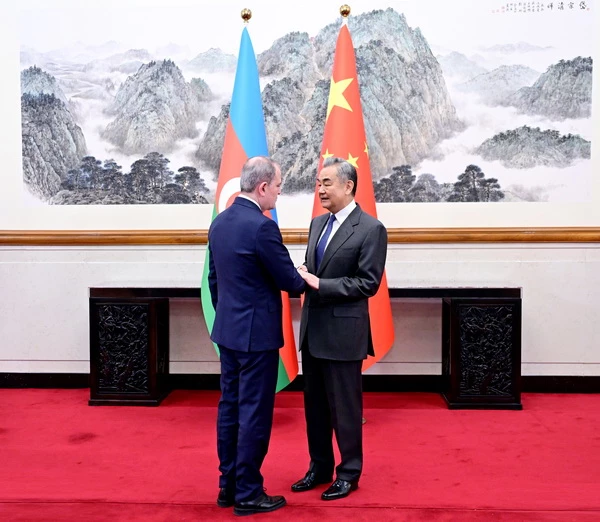
- Late January: Foreign Minister Wang Yi held talks with Azerbaijani Foreign Minister Bayramov, agreeing to deepen cooperation ahead of the 35th anniversary of diplomatic ties in 2027.
- Early February: President Aliyev visited Huawei’s Beijing exhibition hall and the Capital Museum during his China trip.
President Aliyev stated: “Within a year, Azerbaijan and China signed two documents—first strategic partnership, then comprehensive strategic partnership. This has given a major boost to bilateral economic relations.”
Bilateral trade has surpassed $4 billion.
03 Flagship Cooperation Projects: From Traditional Energy to New Frontiers
Energy Cooperation: Expanding from conventional oil & gas to green energy. State Oil Company of Azerbaijan (SOCAR) has signed framework agreements with CITIC Construction.
- Azerbaijan aims to raise renewable energy capacity to 30% of total power by 2030.
- Energy storage systems are a critical demand.
Logistics Hub: The Trans-Caspian International Transport Route (Middle Corridor) is a strategic priority, with Azerbaijan at its core.
Digital Economy: Multiple cooperation agreements signed. Chinese e-commerce, smart logistics, and industrial automation solutions align closely with Azerbaijan’s modernization needs.
04 Market Demand: Key Sectors for Chinese Enterprises
Azerbaijan has a relatively weak industrial base and relies heavily on imported manufactured goods. Machinery, vehicles & parts, and electrical/electronic equipment account for nearly half of total imports.
High-Growth Sectors:
- Infrastructure & Industrial Goods: Construction machinery, equipment, industrial gear, hardware & building materials, power tools.
- New Energy: PV modules, wind turbines, energy storage batteries.
- Agricultural Machinery & Tech: Tractors, smart agriculture, water-saving irrigation, PV greenhouses.
- Consumer Goods & Automotive: Home appliances, consumer electronics, automobiles & spare parts.
Market demand follows the pattern: production materials first, consumer goods later.
05 Policy Environment: Incentives Driving Economic Transition
“Investment Promotion Document” Regime (for certified investors, 7-year benefits):
- 50% reduction in corporate income tax.
- Full exemption from property tax and land tax.
- VAT (18%) and customs duty (up to 15%) exemption for imported machinery, equipment, and related technology.
Special Zone Policies: Alat Free Economic Zone, Sumgait Chemical Industrial Park, etc., offer 10-year tax holidays.
06 Trade Models & Practical Guidelines
Three Market Entry Modes:
- Agency/Distribution: Critical to partner with strong, well-connected local firms.
- Project-Based: Requires high-level liaison and robust local partners.
- Direct Investment/Local Manufacturing: Qualifies for tax incentives and serves as a hub for neighboring markets.
Critical Pitfalls to Avoid:
- Neglecting long-term relationship building and seeking quick wins.
- Underestimating customs complexity and potential corruption risks.
- Attempting to operate alone without local partners.
- Navigating opacity risks under the Trade Secrets Law.
Conclusion
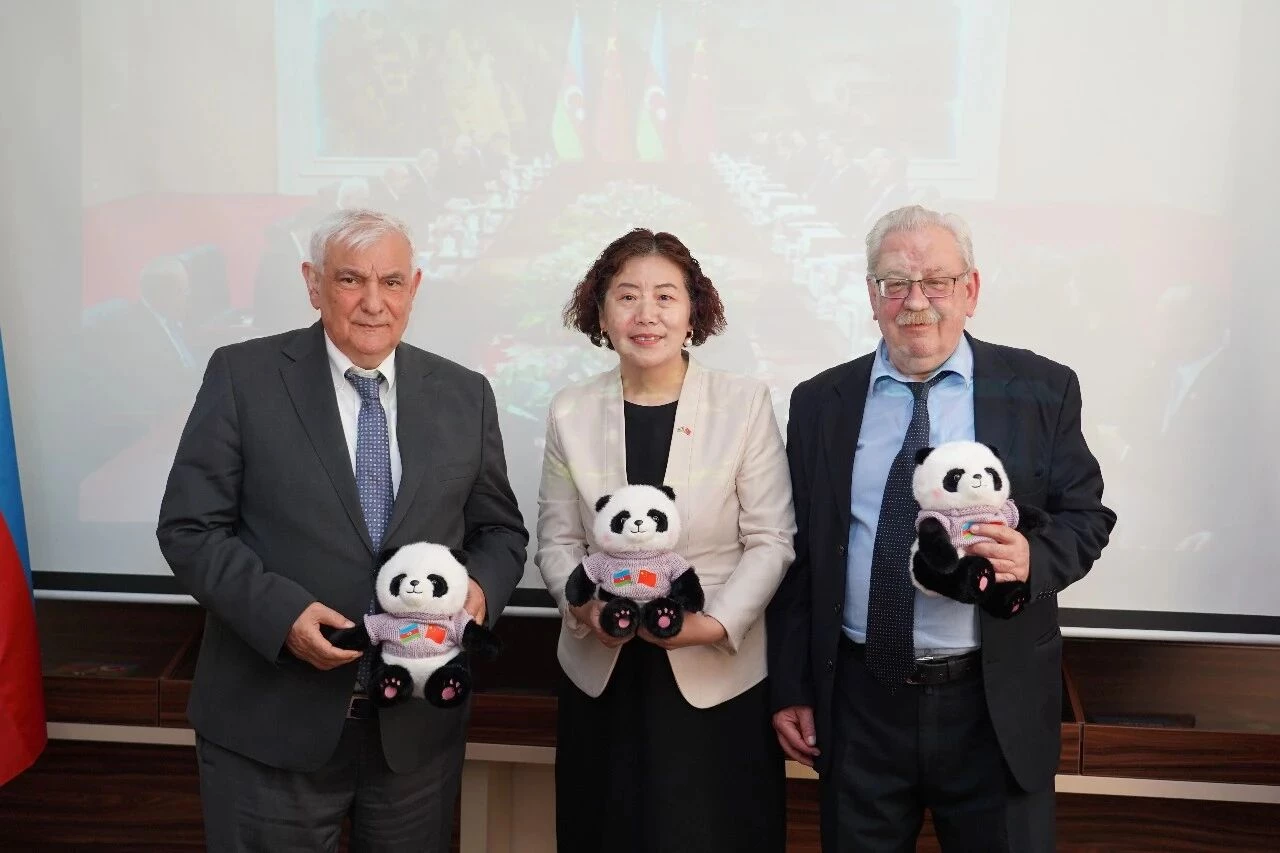
On April 2, 2026, China and Azerbaijan marked the 34th anniversary of diplomatic relations. From C5 to C6, from energy corridor to Digital Silk Road, Azerbaijan is emerging as an indispensable strategic pivot for Chinese enterprises going west.
Opportunities and risks coexist, but the window of opportunity will not stay open forever.
2026 SMART LIFE EXPO AZERBAIJAN
- Dates: September 21–23, 2026
- Venue: Baku
- Frequency: Annual