- WhatsApp: +994504755728 +8615800837670
- EMAIL: export.import.baku@gmail.com carrie@kacexpo.com
Azerbaijan’s Green Leap: From an Oil and Gas Giant to a Caspian Clean Energy Hub.
From 16 to 19 June 2026, Baku, the capital of Azerbaijan, will host the 51st Annual Meeting of the Islamic Development Bank (IsDB) Group. Under the theme “Regional Integration for Sustainable Prosperity”, more than 2,000 delegates, including finance ministers and central bank governors from 57 member countries, will gather on the shores of the Caspian Sea to discuss regional economic integration and sustainable development. For Azerbaijan, a country transitioning from an oil and gas exporter to a green energy hub, this event is not only a diplomatic highlight but also an important window to showcase its transformation achievements.
This article, from Baku’s perspective, outlines the roadmap and practical path of Azerbaijan’s green energy transition.
1. From “Black Gold” to “Green Energy”: A Strategic Turn for an Oil and Gas Power
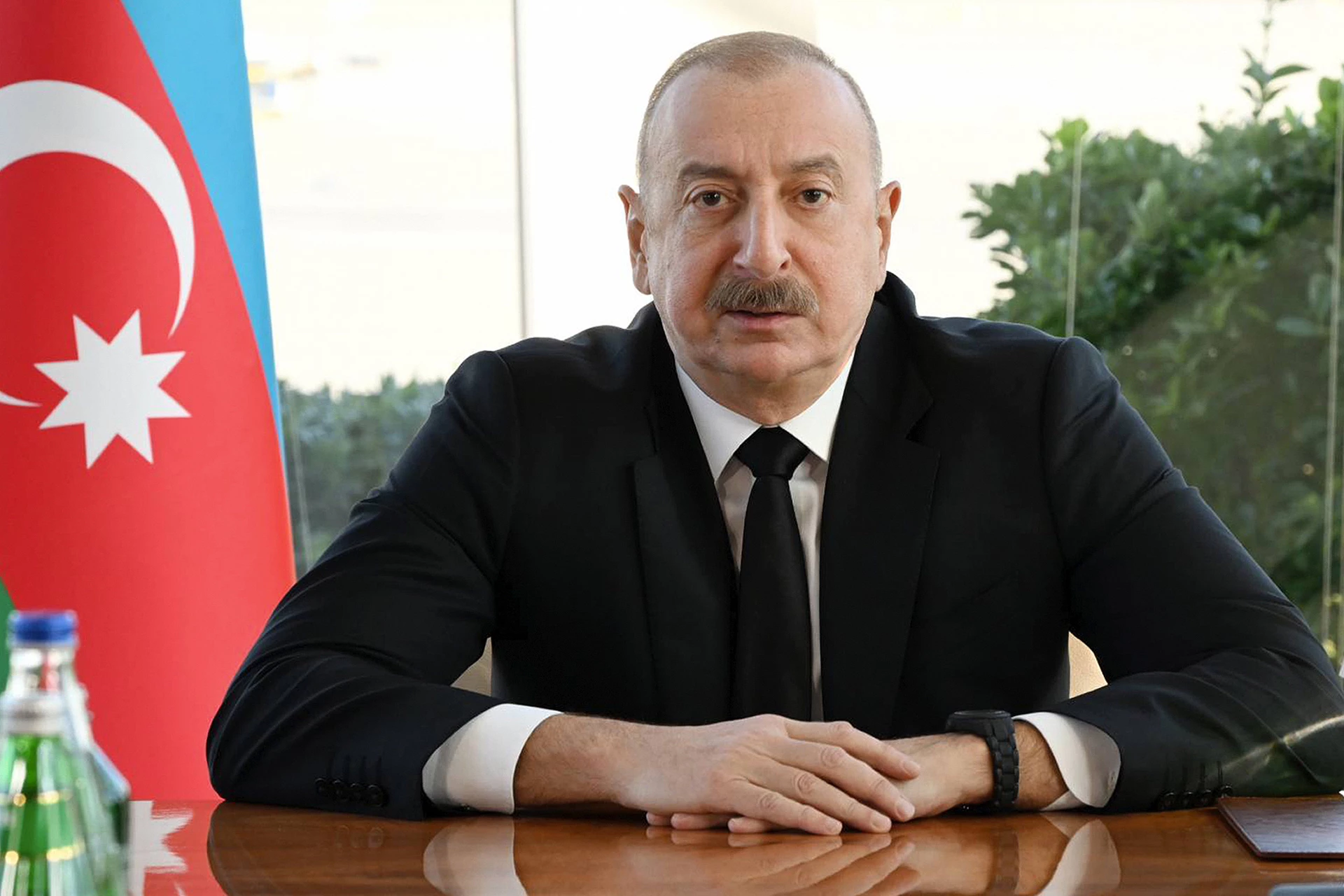
For a long time, Azerbaijan’s name has been closely linked to Caspian oil and gas. Thanks to its abundant Caspian hydrocarbon resources, Azerbaijan’s total installed power generation capacity has reached 10 GW, nearly three times the level of 20 years ago. At the same time, Azerbaijan’s natural gas exports to Europe have increased by 56% since 2021, totalling 25.2 billion cubic metres in 2025, with more than half supplied to EU countries.
Yet Azerbaijan has not stopped there. In January 2026, President Ilham Aliyev explicitly stated the goal of integrating 6,000 MW of wind, solar, and hydropower into the grid by 2030, expanding to 8,000 MW by 2032. Javid Abdullayev, Director of the Renewable Energy Agency under Azerbaijan’s Ministry of Energy, explained the “gradual transition” strategy: “ensure current security with oil and gas, and seek long‑term diversification with renewable energy.”
2. Green Power “Star Map”: Solar and Wind Projects Fully Underway
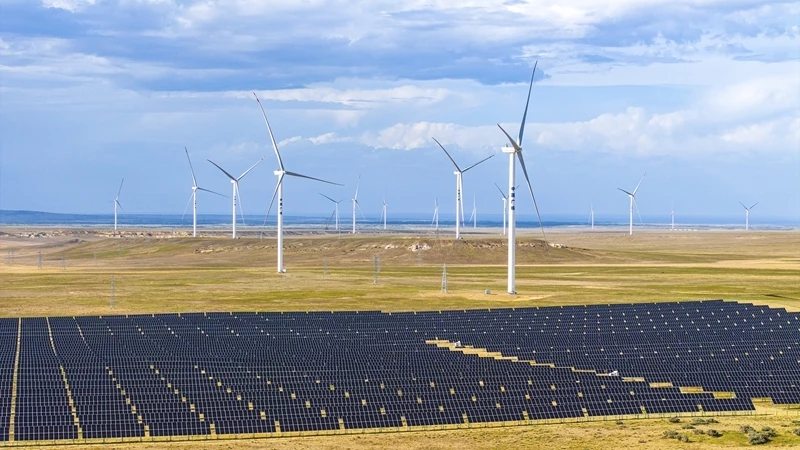
Largest wind power project in the Caucasus put into operation. On 8 January 2026, the “Khizi‑Absheron” wind power project, invested by Saudi Arabia’s ACWA Power and built by PowerChina Huadong Engineering Corporation, was commissioned in Baku. The project has a total installed capacity of 240 MW, generates 1 billion kWh annually, can meet the electricity needs of more than 300,000 households, and reduces CO₂ emissions by 400,000 tonnes per year. Chinese companies adopted an innovative “sea and land parallel” approach, creating more than 200 local jobs. The ACWA Power project manager said, “We view China as an important strategic partner in the global energy transition process.”
Multiple projects by UAE’s Masdar. Masdar previously built the 230 MW Garadagh solar plant. Currently, the 445 MW Bilasuvar and 315 MW Neftchala solar power stations are under accelerated construction, expected to be commissioned by the end of 2026 or early 2027. The two stations together represent an investment of approximately US$670 million, generate about 1.7 billion kWh annually, and save 380 million cubic metres of natural gas per year. In addition, the 240 MW Absheron‑Garadagh onshore wind farm is expected to be commissioned by the end of 2027.
More international cooperation projects in the pipeline. UK‑based bp is building the 240 MW Shafag solar power station in the Jabrayil region, scheduled to be connected to the grid by July 2026. The Nagorno‑Karabakh region has an estimated renewable potential of 10,000 MW, with 307 MW of hydropower already connected and plans to double that capacity. According to a report by Azerbaijan’s Ministry of Finance, the country plans to invest US$2.7 billion in the next two years to build 10 solar and wind power plants.
3. Caspian Green Energy Corridor: From Resource Nation to Energy Hub
On 9 April 2026, Kazakhstan ratified a strategic partnership agreement with Azerbaijan and Uzbekistan on green energy production and transmission. The agreement envisions transmitting Central Asian green electricity to Azerbaijan via a high‑voltage direct current (HVDC) submarine cable across the Caspian Sea, and then further exporting it to Europe via the Black Sea route.
Azerbaijan’s Energy Minister Parviz Shahbazov stated that this corridor will enhance energy and environmental security for the countries along the route, as well as improve digital and transport connectivity. The Asian Development Bank and the Asian Infrastructure Investment Bank have expressed support for feasibility studies. President Aliyev revealed that the theoretical potential of offshore wind in Azerbaijan’s Caspian sector alone is as high as 157 GW. The Islamic Development Bank also exchanged views on the “Offshore Wind Power Infrastructure Development Project” with the Ministry of Energy in December 2024.
4. Islamic Development Bank: A Financial Catalyst for Green Transition
Azerbaijan’s cooperation with the Islamic Development Bank spans more than three decades. Since joining IsDB in 1992, the Bank has funded 77 projects totalling US$1.3 billion, most of which are in the energy sector. With IsDB assistance, Azerbaijan has built 1,060 MW of generation capacity, of which 230 MW comes from renewable sources.
The upcoming 51st IsDB Annual Meeting, themed “Regional Integration for Sustainable Prosperity”, is seen as an important platform to deepen green cooperation. The IsDB President emphasised that energy transition, economic diversification, and regional cooperation are the core topics of the meeting. IsDB plans to advance new initiatives with Azerbaijan, including the development of a regional energy corridor and the Alat Free Economic Zone. During a visit to Baku in May 2026, the IsDB Group Chairman reiterated the intention to expand cooperation in green finance and other areas through the 2027‑2031 Partnership Strategy. The Islamic Corporation for the Insurance of Investment and Export Credit (ICIEC) will provide investment insurance and de‑risking support for Azerbaijan’s net‑zero pathway.
5. Challenges and Outlook: From an Oil‑and‑Gas Economy to a Green Vision
The transition faces two major challenges: first, building a completely new system that can accommodate renewables; second, the existing grid was designed for fossil fuels and must be modernised with energy storage.
To address these challenges, Azerbaijan is taking multiple measures. The World Bank is providing technical assistance for the AZURE project, helping to integrate 1 GW of solar and wind capacity and build battery storage. The first batch of about 250 MW of battery energy storage systems has begun installation. By 2027, the share of renewable energy in Azerbaijan’s installed capacity is expected to reach 33.7%, rising to 38% by 2030 and 42.5% by 2035.
In international cooperation, China is playing an increasingly important role. Azerbaijan has established a strategic partnership with China Energy Engineering Corporation (CEEC) and, together with China Datang Corporation and PowerChina, is advancing large‑scale renewable energy projects. The country plans to launch at least 1,000 MW of projects with Chinese companies in the future. Additionally, Azerbaijan plans to use renewable energy to power data centres and AI development, transforming into a regional digital innovation hub, and to export green electricity and hydrogen to Europe via the green energy corridor.
From Baku’s oil piers to wind turbines on mountain ridges, from the Caspian seabed cable to the upcoming international forum, Azerbaijan is telling the story of a changing era with a clear energy transition roadmap. As President Aliyev said, “Developing renewable energy is the core pillar of the country’s energy strategy and a key measure to modernise the energy system.”
In June, Baku will host the 51st Annual Meeting of the Islamic Development Bank. Azerbaijan, as a practitioner of green transition and a regional energy hub, will present its own answer to the world.
September in Azerbaijan is also worth looking forward to. From 21 to 23 September 2026, the 8th Smart Life Expo Azerbaijan will be held at the Baku Expo Centre. The exhibition aims to provide an excellent platform for global companies to showcase new products, exchange technology, and establish business connections – another window for those who wish to observe Azerbaijan’s market potential and seize regional cooperation opportunities.