- WhatsApp: +994504755728 +8615800837670
- EMAIL: export.import.baku@gmail.com carrie@kacexpo.com
Azerbaijan’s Green Leap: From an Oil and Gas Giant to a Caspian Clean Energy Hub.
From 16 to 19 June 2026, Baku, the capital of Azerbaijan, will host the 51st Annual Meeting of the Islamic Development Bank (IsDB) Group. Under the theme “Regional Integration for Sustainable Prosperity”, more than 2,000 delegates, including finance ministers and central bank governors from 57 member countries, will gather on the shores of the Caspian Sea to discuss regional economic integration and sustainable development. For Azerbaijan, a country transitioning from an oil and gas exporter to a green energy hub, this event is not only a diplomatic highlight but also an important window to showcase its transformation achievements.
This article, from Baku’s perspective, outlines the roadmap and practical path of Azerbaijan’s green energy transition.
1. From “Black Gold” to “Green Energy”: A Strategic Turn for an Oil and Gas Power
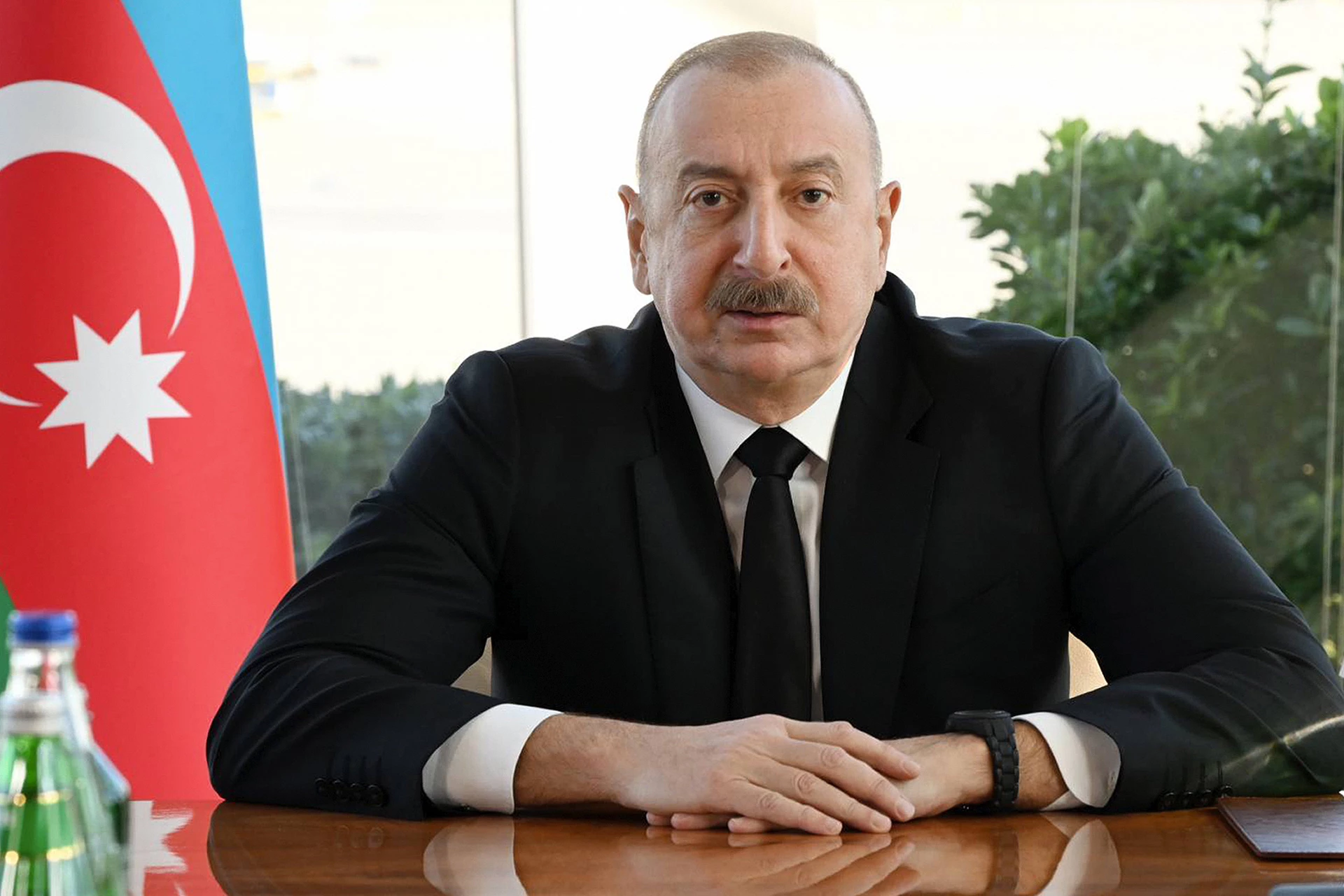
For a long time, Azerbaijan’s name has been closely linked to Caspian oil and gas. Thanks to its abundant Caspian hydrocarbon resources, Azerbaijan’s total installed power generation capacity has reached 10 GW, nearly three times the level of 20 years ago. At the same time, Azerbaijan’s natural gas exports to Europe have increased by 56% since 2021, totalling 25.2 billion cubic metres in 2025, with more than half supplied to EU countries.
Yet Azerbaijan has not stopped there. In January 2026, President Ilham Aliyev explicitly stated the goal of integrating 6,000 MW of wind, solar, and hydropower into the grid by 2030, expanding to 8,000 MW by 2032. Javid Abdullayev, Director of the Renewable Energy Agency under Azerbaijan’s Ministry of Energy, explained the “gradual transition” strategy: “ensure current security with oil and gas, and seek long‑term diversification with renewable energy.”
2. Green Power “Star Map”: Solar and Wind Projects Fully Underway
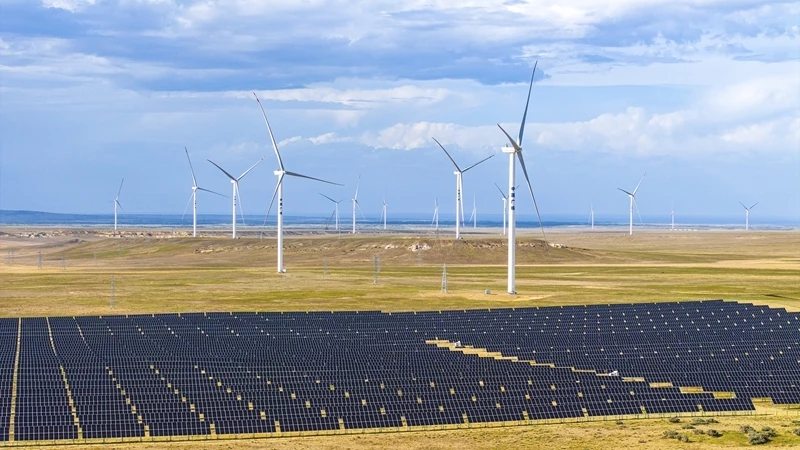
Largest wind power project in the Caucasus put into operation. On 8 January 2026, the “Khizi‑Absheron” wind power project, invested by Saudi Arabia’s ACWA Power and built by PowerChina Huadong Engineering Corporation, was commissioned in Baku. The project has a total installed capacity of 240 MW, generates 1 billion kWh annually, can meet the electricity needs of more than 300,000 households, and reduces CO₂ emissions by 400,000 tonnes per year. Chinese companies adopted an innovative “sea and land parallel” approach, creating more than 200 local jobs. The ACWA Power project manager said, “We view China as an important strategic partner in the global energy transition process.”
Multiple projects by UAE’s Masdar. Masdar previously built the 230 MW Garadagh solar plant. Currently, the 445 MW Bilasuvar and 315 MW Neftchala solar power stations are under accelerated construction, expected to be commissioned by the end of 2026 or early 2027. The two stations together represent an investment of approximately US$670 million, generate about 1.7 billion kWh annually, and save 380 million cubic metres of natural gas per year. In addition, the 240 MW Absheron‑Garadagh onshore wind farm is expected to be commissioned by the end of 2027.
More international cooperation projects in the pipeline. UK‑based bp is building the 240 MW Shafag solar power station in the Jabrayil region, scheduled to be connected to the grid by July 2026. The Nagorno‑Karabakh region has an estimated renewable potential of 10,000 MW, with 307 MW of hydropower already connected and plans to double that capacity. According to a report by Azerbaijan’s Ministry of Finance, the country plans to invest US$2.7 billion in the next two years to build 10 solar and wind power plants.
3. Caspian Green Energy Corridor: From Resource Nation to Energy Hub
On 9 April 2026, Kazakhstan ratified a strategic partnership agreement with Azerbaijan and Uzbekistan on green energy production and transmission. The agreement envisions transmitting Central Asian green electricity to Azerbaijan via a high‑voltage direct current (HVDC) submarine cable across the Caspian Sea, and then further exporting it to Europe via the Black Sea route.
Azerbaijan’s Energy Minister Parviz Shahbazov stated that this corridor will enhance energy and environmental security for the countries along the route, as well as improve digital and transport connectivity. The Asian Development Bank and the Asian Infrastructure Investment Bank have expressed support for feasibility studies. President Aliyev revealed that the theoretical potential of offshore wind in Azerbaijan’s Caspian sector alone is as high as 157 GW. The Islamic Development Bank also exchanged views on the “Offshore Wind Power Infrastructure Development Project” with the Ministry of Energy in December 2024.
4. Islamic Development Bank: A Financial Catalyst for Green Transition
Azerbaijan’s cooperation with the Islamic Development Bank spans more than three decades. Since joining IsDB in 1992, the Bank has funded 77 projects totalling US$1.3 billion, most of which are in the energy sector. With IsDB assistance, Azerbaijan has built 1,060 MW of generation capacity, of which 230 MW comes from renewable sources.
The upcoming 51st IsDB Annual Meeting, themed “Regional Integration for Sustainable Prosperity”, is seen as an important platform to deepen green cooperation. The IsDB President emphasised that energy transition, economic diversification, and regional cooperation are the core topics of the meeting. IsDB plans to advance new initiatives with Azerbaijan, including the development of a regional energy corridor and the Alat Free Economic Zone. During a visit to Baku in May 2026, the IsDB Group Chairman reiterated the intention to expand cooperation in green finance and other areas through the 2027‑2031 Partnership Strategy. The Islamic Corporation for the Insurance of Investment and Export Credit (ICIEC) will provide investment insurance and de‑risking support for Azerbaijan’s net‑zero pathway.
5. Challenges and Outlook: From an Oil‑and‑Gas Economy to a Green Vision
The transition faces two major challenges: first, building a completely new system that can accommodate renewables; second, the existing grid was designed for fossil fuels and must be modernised with energy storage.
To address these challenges, Azerbaijan is taking multiple measures. The World Bank is providing technical assistance for the AZURE project, helping to integrate 1 GW of solar and wind capacity and build battery storage. The first batch of about 250 MW of battery energy storage systems has begun installation. By 2027, the share of renewable energy in Azerbaijan’s installed capacity is expected to reach 33.7%, rising to 38% by 2030 and 42.5% by 2035.
In international cooperation, China is playing an increasingly important role. Azerbaijan has established a strategic partnership with China Energy Engineering Corporation (CEEC) and, together with China Datang Corporation and PowerChina, is advancing large‑scale renewable energy projects. The country plans to launch at least 1,000 MW of projects with Chinese companies in the future. Additionally, Azerbaijan plans to use renewable energy to power data centres and AI development, transforming into a regional digital innovation hub, and to export green electricity and hydrogen to Europe via the green energy corridor.
From Baku’s oil piers to wind turbines on mountain ridges, from the Caspian seabed cable to the upcoming international forum, Azerbaijan is telling the story of a changing era with a clear energy transition roadmap. As President Aliyev said, “Developing renewable energy is the core pillar of the country’s energy strategy and a key measure to modernise the energy system.”
In June, Baku will host the 51st Annual Meeting of the Islamic Development Bank. Azerbaijan, as a practitioner of green transition and a regional energy hub, will present its own answer to the world.
September in Azerbaijan is also worth looking forward to. From 21 to 23 September 2026, the 8th Smart Life Expo Azerbaijan will be held at the Baku Expo Centre. The exhibition aims to provide an excellent platform for global companies to showcase new products, exchange technology, and establish business connections – another window for those who wish to observe Azerbaijan’s market potential and seize regional cooperation opportunities.
Azerbaijan is strategically situated at the crossroads of Europe and Asia, serving as a vital hub connecting Central Asia, Europe, and the Middle East. As one of the first countries to actively respond to and participate in the Belt and Road Initiative, Azerbaijan plays a critically important role in logistics transshipment in the South Caucasus. China accounts for 45% of the region’s trade volume with Azerbaijan, and China is firmly Azerbaijan’s fourth-largest trading partner and its largest source of imports. Chinese goods make up 17.69% of Azerbaijan’s total imports. From January to November 2025, bilateral trade reached US$4.87 billion, a year‑on‑year increase of 30.2%. The bilateral relationship is at its best in history.
More importantly, in recent years Azerbaijan has unveiled ambitious national digital transformation plans. In January 2025, the country approved the “Digital Development Concept of the Republic of Azerbaijan” and designated 2025 as the “critical year for digital economic development.” The 2025–2030 Digital Economy Strategy contains more than 50 initiatives covering the digitalisation of industry and transportation, the application of artificial intelligence, and the creation of digital twins. Azerbaijan is rapidly transforming from a traditional energy-based economy into a new digital hub.
- Policy Tailwinds: Top‑Level Design for Azerbaijan’s Digital Transformation
2.1 Digital Economy Strategy (2025–2030)
The Ministry of Economy of Azerbaijan and the Centre for Analysis and Coordination of the Fourth Industrial Revolution are jointly formulating the 2025–2030 Digital Economy Strategy. The strategy includes more than 50 initiatives covering the public and private sectors as well as civil society. These include industrial digitalisation, the application of AI and other Fourth Industrial Revolution technologies in industrial enterprises, the development of AI solutions based on big data, and the creation of digital twins in agriculture, urban planning, transportation, and other fields.
Specific transformation KPIs have been set: in 2025, Azerbaijan will launch “Industry 4.0” projects, inviting domestic and international experts to study business process models and develop technological roadmaps, with the goal of having 650 enterprises complete digital transformation by 2030.
2.2 Alat Free Economic Zone (ALAT FEA)
The Alat Free Economic Zone is a core vehicle for attracting foreign investment and building a Eurasian logistics hub. In March 2026, an investment promotion conference themed “Focus on Alat Free Economic Zone, Jointly Explore New Opportunities in the Eurasian Market” was held in Beijing, attracting more than 220 representatives from government agencies, energy & power, construction, manufacturing, investment and finance sectors. The FEZ offers tax incentives, simplified customs procedures, and other preferential policies, making it an ideal entry point for Chinese companies looking to deploy smart logistics and IoT businesses in Azerbaijan.

III. Market Status: Development Foundation for Smart Logistics & IoT in Azerbaijan
3.1 4G/5G Network Infrastructure – The “Highway” for Smart Logistics

Good communications infrastructure is a prerequisite for the development of smart logistics and IoT. Azerbaijan has already achieved remarkable results in network construction: it has built 4G infrastructure covering 98% of its population and is deploying 5G trial networks in major cities. In Q1 2025, mobile internet penetration reached 76%, and average monthly data usage per user exceeded 12GB, indicating a high degree of digital maturity.
At the operator level, Azercell holds the largest market share (approx. 48‑51%), with 4G coverage of about 94‑98% of the population and territory. In 2023, it installed more than 300 new LTE base stations and modernised over 1,600 existing sites, doubling the average internet speed. The fibre‑optic backbone built along the Baku‑Tbilisi‑Kars railway has significantly improved east‑west communication efficiency, providing a foundation for real‑time transmission of big data in smart logistics.
3.2 Cross‑Border Logistics Hub – The Middle Corridor and Trans‑Caspian Route
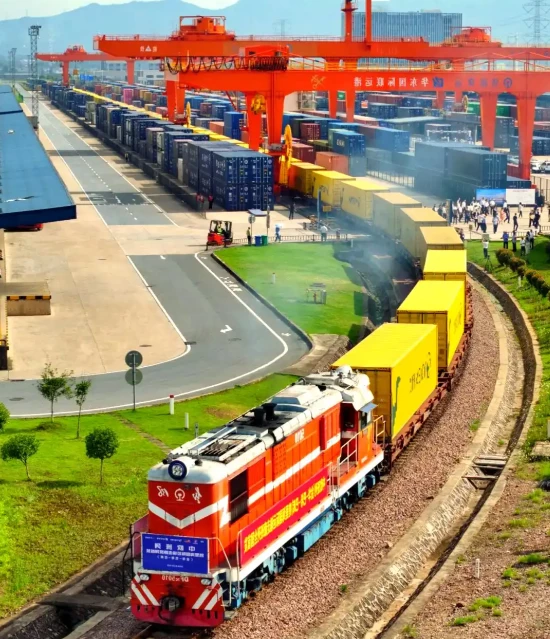
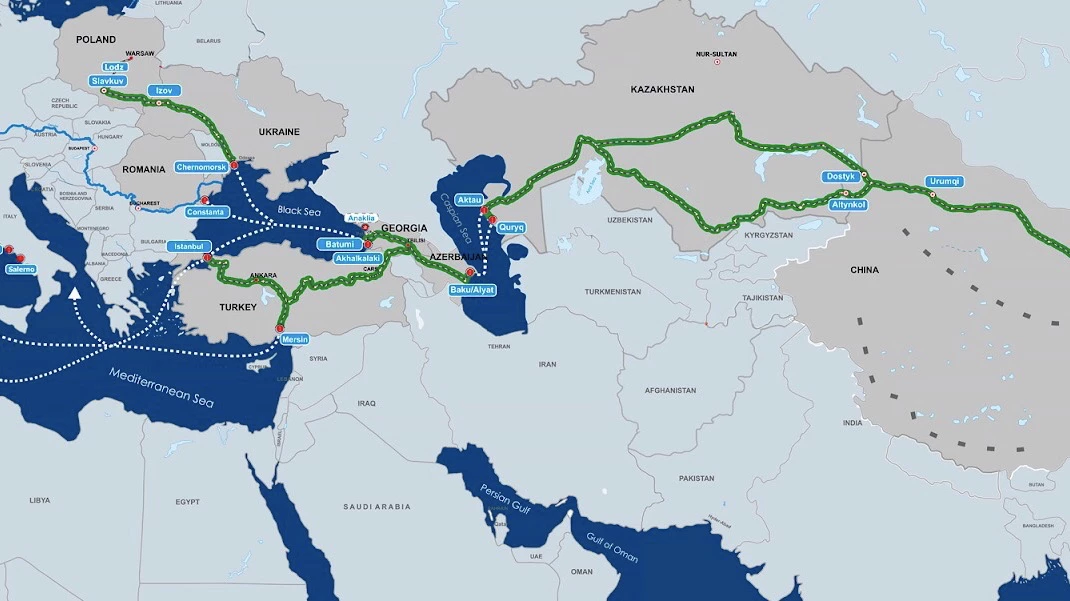
Azerbaijan is a key node of the Trans‑Caspian International Transport Route (TITR), also known as the “Middle Corridor”. Since 2026, the China‑Europe freight train (Wuhan) has opened a new route to Baku, Azerbaijan. Leaving China via the Khorgos Port, crossing Kazakhstan, and then connecting to the southern Trans‑Caspian International Transport Corridor, the “rail + sea” intermodal service delivers seamless connections, with the entire journey expected to reach Baku in 18 days. Tianjin has also launched its first Trans‑Caspian Central Asia train to Baku, using a “sea‑rail‑sea” intermodal model; after arriving in Baku, goods can be further distributed to Turkey and many other countries and regions.
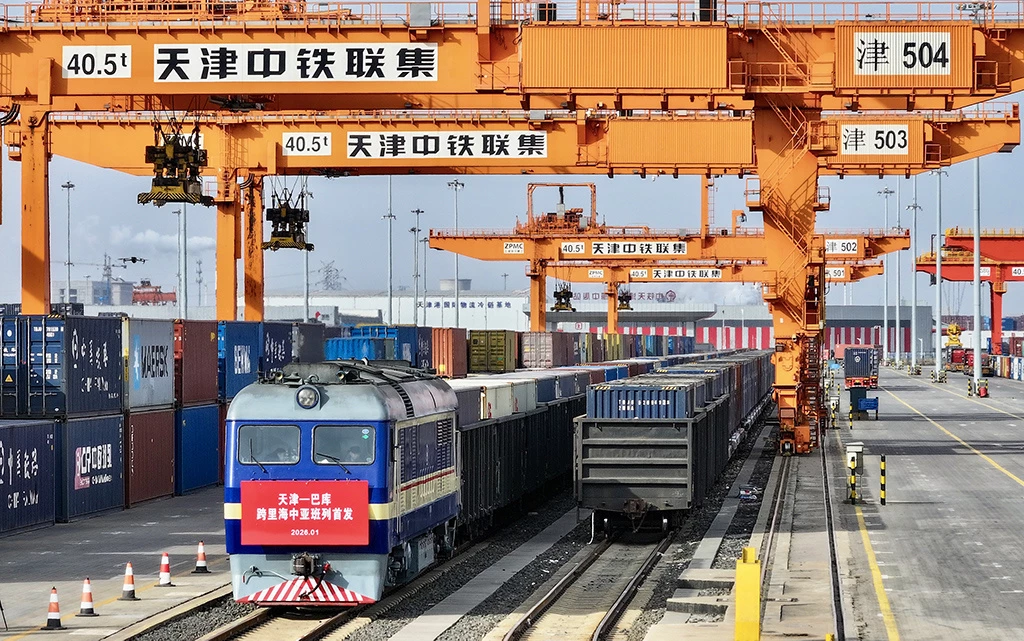
Baku and the Kazakh port city of Aktau face each other across the Caspian Sea, both serving as important nodes of the Trans‑Caspian intermodal transport corridor. With the stable operation of the southern route of the China‑Europe Railway, Azerbaijan is becoming a key logistics hub connecting China with Europe and the Middle East.
3.3 E‑commerce Explosion – Surging Logistics Demand
Azerbaijan’s e‑commerce market is growing at high speed. According to Statista, the Azerbaijani e‑commerce market is expected to exceed US$1.76 billion in 2025, with an average annual growth rate of 10.47% over the next few years, potentially reaching US$2.751 billion by 2029.
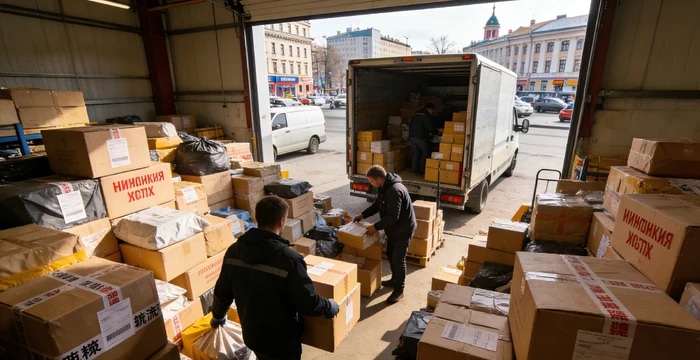
In cross‑border e‑commerce, Russian platform Ozon officially entered the Azerbaijani market in August 2024. On Ozon’s local page in Azerbaijan, more than 8 million products from Chinese sellers are already available. Annual revenue growth in Azerbaijan’s e‑commerce sector is projected to reach 24% by 2028. The explosive growth of e‑commerce is driving an urgent need to upgrade smart logistics infrastructure.
- Which Chinese Companies Are Already Active in Azerbaijan’s Smart Logistics & IoT Space?

4.1 Smart Logistics & Supply Chain Services
China Railway Container Transport Corp., Ltd. has joined Middle Corridor Multimodal Ltd., a company registered in Astana in 2023 by the railway authorities of Kazakhstan, Azerbaijan, and Georgia. The aim is to integrate and coordinate various transport resources and provide customers with freight forwarding services along the Middle Corridor, with unified pricing for the entire journey.
Sichuan Port & Logistics Investment Group’s Luhaiyun Port has engaged with the Azerbaijan Railways (ADY), Caspian Shipping Company, Baku International Sea Port, and Baku Shipyard to deepen logistics cooperation across the Trans‑Caspian route, focusing on synergy in rail, sea, road and air transport.
China United Logistics Group now operates four freight trains per month on the southern corridor. Cargo departs from the Khorgos Port, travels by rail to Aktau, is transferred by sea to Baku Commercial Port, and has successfully completed the first “door‑to‑door” delivery service in the Caucasus region, achieving a breakthrough in last‑mile coverage.
Shanxi Huayuan International Land Port Group, together with China Railway Taiyuan Group, China Railway Container Transport, and others, launched Shanxi’s first “Trans‑Caspian” international train, delivering photovoltaic modules efficiently to the Caucasus, Turkey, and Eastern European countries.
4.2 IoT & Digital Solutions
Xiamen Ccore (magnet technology) provides an intelligent transport system (ITS) for public buses in Baku, equipping buses with route signs, surveillance, ADAS, DMS, and other auxiliary functions, along with an ITS that enables cloud‑based real‑time monitoring of vehicle and battery data, providing a “digital & intelligent” backbone for Baku’s bus operations – a replicable smart‑transport model for countries along the Belt and Road.
Zhongke Yixing signed an order on the first working day of 2025 to supply 2,000 advanced customised communication IoT data‑collection terminals and a supporting intelligent digital platform for energy consumption management – marking the first batch application of its products in Azerbaijan and breaking new ground for Chinese IoT companies in the field of smart energy consumption data collection in the country.
Huawei is also actively expanding in Azerbaijan. A delegation from the State Oil Company of Azerbaijan (SOCAR) held in‑depth discussions with Huawei management during a business visit to China, planning to invite Huawei to implement digital solutions and intelligent control systems in Azerbaijan’s natural gas infrastructure to improve operational efficiency and deploy innovative technologies in energy management.
- Market Opportunities
- Policy dividend window:Azerbaijan regards telecommunications as the second‑largest economic growth engine after its energy sector. The government’s top‑level push for industrial digital transformation sends a clear market signal to Chinese companies.
- Continuous improvement of logistics corridors:The launch of the Trans‑Caspian International Transport Route has significantly improved China‑Azerbaijan logistics efficiency, offering a new international logistics choice with better transit times and higher security for high‑value goods.
- Surging demand from e‑commerce and smart logistics:The e‑commerce boom is generating strong demand for smart warehousing, intelligent delivery, digital customs management, and related services.
- Digitalisation of energy and transport is an urgent need:Azerbaijan is vigorously driving digital transformation in traditional industries such as oil and gas. Demand is strong for IoT collection equipment, industrial 5G private networks, energy management systems, and more.
Conclusion
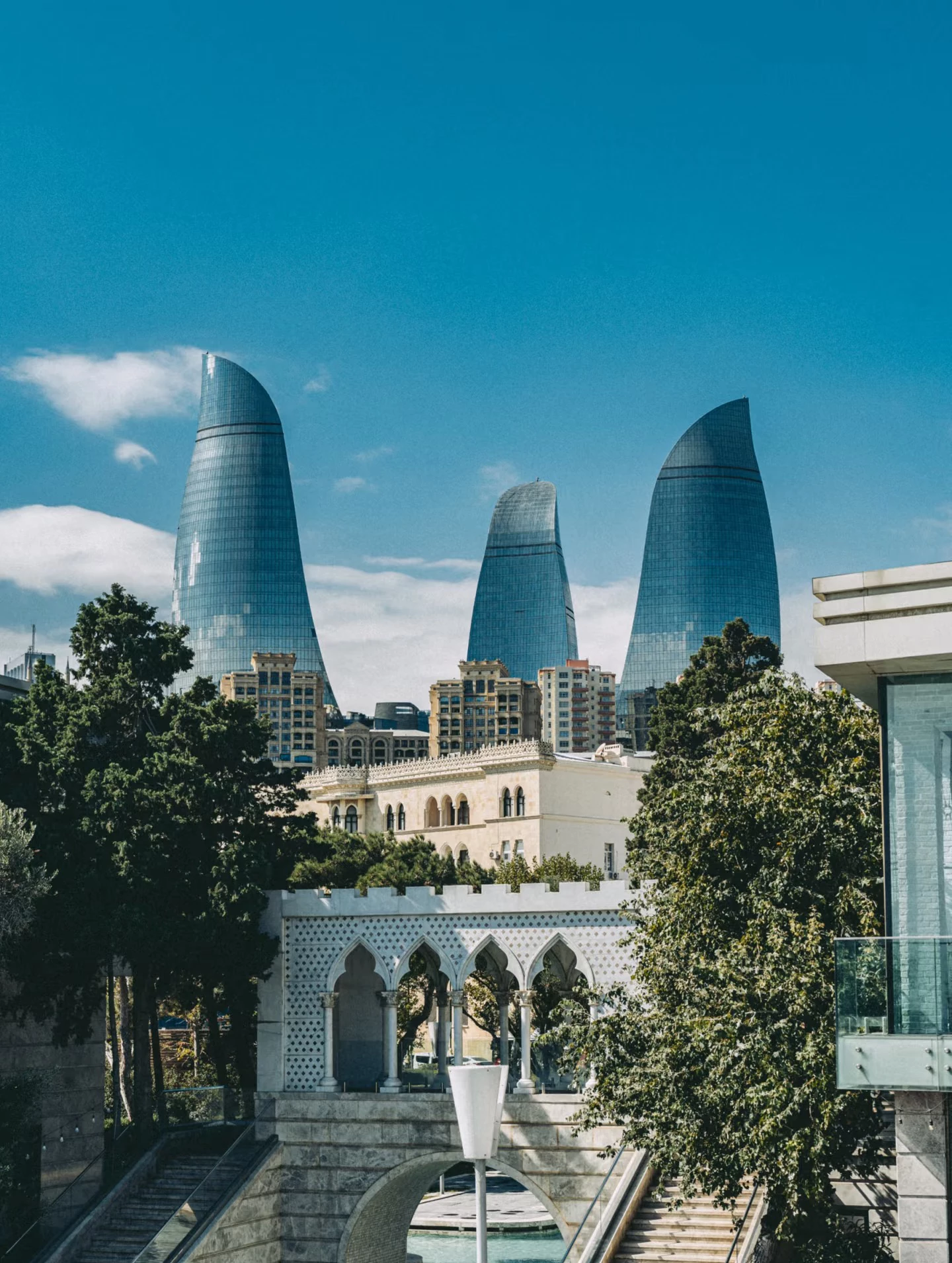
Azerbaijan stands at a critical juncture in its digital economy transformation. The release of the 2025–2030 Digital Economy Strategy signals that this Caspian nation is fully committed to seizing the high ground in Eurasia. Chinese companies such as China Railway Container Transport, China United Logistics, Xiamen Ccore, and Zhongke Yixing have already taken the first steps, but the market remains far from saturated – opportunities still lie ahead.
From 21 to 23 September 2026, the 8th Smart Life Expo Azerbaijan will be held at the Baku Expo Center, featuring sections on consumer electronics, smart home, automatic control systems, and more. It is an ideal springboard for Chinese smart logistics and IoT companies to enter the South Caucasus market. Seize the window – go to Baku and meet your next growth opportunity.
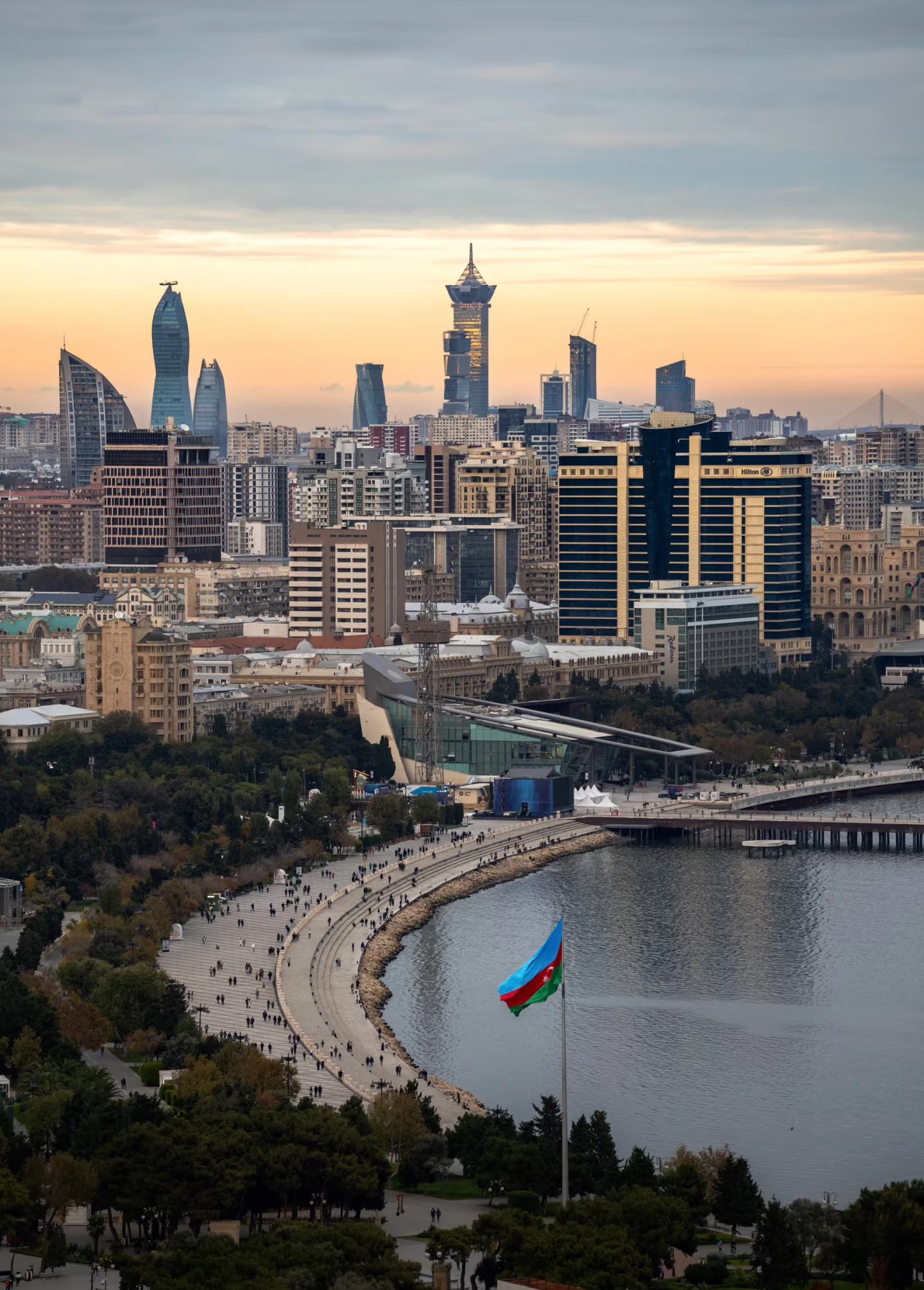
Subtitle: From Digitalization to Green Energy – Understanding the “Invisible Upgrade” of Azerbaijan’s Import Structure
we analyzed the overall opportunities in Georgia and Azerbaijan as strategic pivots of the “Middle Corridor.” Today, we zoom in on Azerbaijan – China’s largest trading partner in the Caucasus region.
With a trade volume of $3.4 billion in the first three quarters of 2025 and a year-on-year growth of 28%, behind these numbers lies a profound transformation in demand. As the era of “anything sells” comes to an end, the opportunities in 2026 belong to those who understand the structural changes.
Smart Life Expo Azerbaijan will be held on September 21–23 at the Baku Expo Center – the best window for Chinese companies to systematically connect with the Azerbaijani market.
01 Farewell to “Petrodollars”: A Top-Down Economic Transformation
Azerbaijan, long dependent on oil and gas, is now promoting economic diversification as a national strategy, fundamentally changing its import demand structure.
- Strategic Resolve:The government has clearly made “moving away from oil and gas dependence” a core national policy. Investment in non-oil industries grew by 18% in 2025, with ICT and renewable energy as key focus areas.
- Data Confirmation:Oil and gas revenue as a share of the budget fell from 66% in 2014 to 49% in 2024. From 2021 to 2024, non-oil industries grew at an average annual rate of 6.7%, now accounting for 68% of the economy.
- Demand Shift:Imports are rapidly shifting from traditional consumer goods to production materials and technology solutions. Companies that can provide solutions for industrialization, digitalization, and green transformation will secure the next phase of market entry.
Smart logistics, new energy, and agricultural technology – Chinese companies are becoming the top choice for Azerbaijani buyers.
02 Three Golden Tracks: From “Made in China” to “Empowered by China”
Track 1: Smart Logistics and IoT (Most Urgent Demand)
Core Hub: Baku (Alat) Port – The “AI Brain” of the Middle Corridor
As the largest port on the Caspian Sea and a core node of the Middle Corridor, Baku Port is striving to achieve an annual throughput capacity of 260,000 TEUs. In 2025, its container throughput broke the historical record of 100,000 TEUs. It has also been proposed as the headquarters for the Middle Corridor Artificial Intelligence Cooperation Mechanism.
Real Gaps (Tens of millions of USD):
- Customs intelligent identification and container GPS tracking systems
- Maritime shipping dispatch and multimodal transport software platforms
- IoT sensors for the Baku-Tbilisi-Kars railway
- Full-process digitalization equipment for ports
Opportunity: Chinese companies offering integrated hardware and software solutions are the most competitive. A single port digitalization project alone represents tens of millions of dollars in equipment demand.
Track 2: Electric Buses and Charging Infrastructure (Most Clear-cut Policy)
Policy Tailwind: Baku’s Green Transport Overhaul (Driven by COP29 Climate Conference)
- The government has clearly stated it will replace 30% of public transport with electric vehicles within three years, with full import tariff exemptions.
- Approximately 3,000 fuel-powered buses will be gradually phased out nationwide.
- BakuBus has signed a contract with BYD for 160 electric buses + 100 charging stations ($51 million).
- From 2025 to 2028, an additional 200 buses will be purchased annually, with local assembly to be launched.
Blue Ocean Gaps for Chinese Companies:
- High-power DC fast chargers (seriously lacking in local supporting facilities)
- Battery maintenance, testing, and swapping equipment
- On-board smart payment and dispatch terminals
Opportunity: While BYD and other vehicle manufacturers have entered the market, the supporting supply chain is completely blank. Small and medium-sized suppliers can directly connect with municipal governments and bus companies.
Track 3: Small and Medium-Sized Agricultural Machinery and Food Processing (Most Stable Livelihood)
Agriculture as a National Foundation: Government Subsidies + Industrial Upgrade
- Agriculture accounts for 7.5% of GDP and employs 34% of the workforce. It has been listed as one of the four priority industries for diversification.
- The government offers over 75 types of subsidies, with up to 50% subsidies for agricultural machinery purchases.
- Specialty agricultural products like pomegranates, hazelnuts, and tea urgently need deep processing for export.
Absolute Advantages of High-Cost-Performance Chinese Equipment:
- Small harvesters (adapted to hilly terrain), fruit sorting lines
- Nut roasting, pomegranate/juice aseptic filling lines
- Dairy and meat processing and packaging equipment
Opportunity: Compared to Germany – better cost-performance; compared to Turkey – stronger automation and stability. This is the blue ocean market easiest for small and medium-sized manufacturers to enter.
03 Why Now? An “Anchor of Certainty” in Turbulent Times
With global supply chains being reshaped, the Red Sea crisis continuing, and risks on traditional routes rising, Azerbaijan aligns perfectly with three key certainties:
- Geopolitical Certainty
- Relations with China are at their best in history. A core partner of the Belt and Road Initiative.
- Politically stable and friendly towards China. The safest investment destination in the Caucasus.
- The Middle Corridor, bypassing the Red Sea and Russia, has shifted from a “plan B” to a “must-choose.”
- Policy Certainty
- Policies on foreign investment incentives, tariff reductions, and free economic zones are fully implemented.
- Unprecedented openness in non-oil sectors, with ICT, logistics, and agriculture enjoying institutional dividends.
- National strategies for digitalization, greening, and industrialization are well-funded.
- Demand Certainty
- The three major tracks are not “future stories” but government projects currently under tender.
- Smart ports, electric buses, agricultural upgrades – the demand is real, budgets are clear, and the window of opportunity is limited.
When traditional markets are saturated and thresholds in Europe and America are rising, Azerbaijan is not a “second choice” but a “certain opportunity” that must be seized now.
Summary
For Chinese companies, Azerbaijan is not a market where you can “win without effort,” but it is definitely a market rich in “first-mover dividends.”
September 21–23, 2026, Baku Expo Center.
If you are looking for the next incremental overseas market, and if your products are related to smart logistics, new energy, agricultural machinery, building materials, hardware, or related fields – see you in Baku.
When traditional trade routes are blocked and global supply chains are being reshaped, the next direction for overseas expansion is often found in the overlooked corners of the map.
Currently, the Middle East remains turbulent, risks to Red Sea shipping safety persist, and traditional Eurasian land routes face uncertainties due to geopolitical conflicts. Against this backdrop, an increasing number of Chinese companies are re-examining markets they previously paid little attention to.
Georgia and Azerbaijan—two countries in the Caucasus—are moving from “marginal players” to “strategic pivots.” They may not be the largest markets, but they could be the most stable corridors. They may not be the richest countries, but they could be the fastest-growing trade partners.

This article explores four dimensions:
- Why Now? — The “Middle Corridor” dividend in times of turmoil
- What Did Georgia Import from China in 2025? — Data breakdown and industry opportunities
- What Did Azerbaijan Import from China in 2025? — Detailed analysis of five key growth categories
- The “Hidden Thresholds” of Going Global — What to watch out for
01 Why Now? The “Middle Corridor” Dividend in Times of Turmoil
Traditional routes disrupted: The Middle Corridor accelerates its “mainstreaming”
Over the past two years, global supply chains have experienced severe shocks:
- The Red Sea crisis has reduced shipping capacity on the Suez Canal route by about 30%, causing shipping costs to soar.
- The Russia-Ukraine conflict has significantly increased trade risks and compliance costs along the traditional Northern Corridor (via Russia).
In this context, the Trans-Caspian International Transport Route (commonly known as the “Middle Corridor”) has rapidly upgraded from a “Plan B” to a “strategic option.” This route starts from China, passes through Kazakhstan and the Caspian Sea, reaches Azerbaijan and Georgia, and then extends to Turkey and Europe.
Key Data:
- In the first eight months of 2025, the number of container block trains along the Middle Corridor increased by over 40% year on year.
- Transit time has been reduced from an initial 40 days to 14–18 days.
- Georgia’s Prime Minister disclosed during his visit to China in November 2025 that container freight volume along the Middle Corridor had grown by over 70% year on year.
- Azerbaijan’s Prime Minister stated at the Tbilisi Silk Road Forum that transit freight volume along the Middle Corridor had grown by approximately 90% over the past three years.
Relations with China: Not “swing states,” but “anchors of stability”
Georgia:
- Established a strategic partnership with China in 2023.
- Bilateral trade volume reached $1.6 billion in the first three quarters of 2025, a 15% year-on-year increase.
- The Prime Minister of Georgia explicitly supported the One-China policy at the Shanghai International Import Expo and thanked China for its support of Georgia’s sovereignty and territorial integrity.
- The China-Georgia Free Trade Agreement (effective 2018) covers 95% of Georgia’s exports.
Azerbaijan:
- Azerbaijan’s Deputy Prime Minister stated at the 2025 Import Expo: “Azerbaijan-China relations are at their best period in history.”
- China is Azerbaijan’s fourth-largest trading partner and its largest source of imports.
- Bilateral trade volume reached $3.4 billion in the first nine months of 2025, a 28% year-on-year increase.
- Azerbaijan was one of the first countries to actively respond to and participate in the Belt and Road Initiative.
In a nutshell: In a turbulent international environment, Georgia and Azerbaijan are among the few markets with stable, predictable, and consistently growing relations with China.
02 What Did Georgia Import from China in 2025?
According to the latest data from the National Statistics Office of Georgia (January–September 2025), Georgia’s imports from China reached $1.43 billion, making China its third-largest source of imports (after Turkey and the United States).
Core Import Categories
- Machinery and Electronic Equipment – This is the traditional largest category of Georgia’s imports from China, covering industrial machinery, electronic products, and components. Demand remains stable as Georgia’s infrastructure development and industrialization advance.
- Textiles and Apparel – Chinese-made textiles, garments, and footwear hold a significant share in the Georgian market. Leveraging cost-performance advantages, Chinese clothing is very popular among local small and medium-sized wholesalers and retailers.
- Automobiles and Parts – In the first three quarters of 2025, Georgia’s total automobile imports exceeded $2.8 billion, accounting for more than 20% of its total imports. Chinese auto parts and tires are growing rapidly in the aftermarket.
- Building Materials and Hardware – As several large-scale infrastructure projects advance in Georgia, Chinese building materials are widely used in local construction projects, becoming an important import category.
Notable “Growth Opportunities”
- Infrastructure Materials: The Georgian government is advancing several major infrastructure projects, including the Anaklia Deep Sea Port (planned to become one of the largest ports on the Black Sea), the East-West Highway upgrade, and the railway electrification project. These will generate sustained demand for steel, cement, engineering machinery, and power equipment.
- Consumer Goods Upgrade: As per capita income in Georgia steadily rises, local consumer demand for mid-to-high-end home appliances, smart home products, and consumer electronics is shifting from “whether they exist” to “whether they are good.” This provides a window for Chinese brands to transition from low-price volume to quality premium.
03 What Did Azerbaijan Import from China in 2025?
Azerbaijan’s dependence on Chinese goods is even higher—Chinese goods account for 17.69% of Azerbaijan’s total imports, making China its largest source of imports.
According to data from the State Customs Committee of Azerbaijan, trade volume between China and Azerbaijan reached $3.4 billion in the first three quarters of 2025, a 28% year-on-year increase.
Five Key Growth Categories
- Building Materials and Machinery Equipment (Largest Share)
Azerbaijan is in a phase of large-scale urban renewal and accelerated industrialization. The construction of new urban areas in Baku, the expansion of industrial parks, and the improvement of transportation infrastructure are generating strong demand for construction equipment, hardware, building materials, and power tools.
- Opportunity: Chinese engineering machinery brands like Sany and XCMG have established initial recognition in the Azerbaijani market, but there remains a significant gap for small and medium-sized equipment and tool products.
- Home Appliances and Consumer Electronics
From smart TVs and air conditioners to kitchen appliances, “Intelligently Made in China” has fully penetrated Azerbaijani homes. Brands like Haier, Midea, and Hisense dominate the mid-range market.
- Opportunity: Emerging categories such as smart home products (smart speakers, security cameras) and small appliances (air fryers, robot vacuums) have significant growth potential.
- Automobiles and Parts
Azerbaijan’s car ownership is continuously rising, but the country has almost no automotive manufacturing industry, making it highly dependent on imports for vehicles and components. In the first three quarters of 2025, automobile imports grew about 15% year on year, with Chinese brands’ parts showing noticeable growth in the aftermarket.
- Opportunity: The Azerbaijani government is actively promoting the introduction of electric buses and charging infrastructure, with brands like BYD and Yutong already having projects on the ground.
- Textiles and Apparel
Chinese clothing, with its diverse styles, flexible supply chain, and wide price range, has become the “go-to choice” for local small and medium-sized wholesalers and retailers.
- Opportunity: Fast fashion and functional fabrics (sportswear, outdoor gear) are the fastest-growing subsegments.
- Digital Economy and Green Energy (Core Growth Driver for the Next Three Years)
Azerbaijan has made digital transformation a key direction for national governance. In 2025, China and Azerbaijan signed several cooperation agreements in areas such as smart logistics, IoT, artificial intelligence, and digital infrastructure.
In green energy, Azerbaijan is planning a Caspian-Black Sea-Europe green energy corridor. China’s technological and production capacity advantages in photovoltaics, wind power, and energy storage are highly aligned with its needs.
One assessment: If China’s exports to Azerbaijan over the past five years were primarily “physical goods,” then over the next five years, “digital capabilities + green technologies” will become the new growth engine.
Afterword
In times of global uncertainty, “certainty” itself is a scarce resource.
Georgia and Azerbaijan—two markets with stable relations with China, strategically located along a vital corridor, and with continuously growing import demand—are moving from “neglected corners” to “blue oceans worth reassessing.”
We will continue to provide in-depth previews of exhibitions in Azerbaijan. Stay tuned.
For more information on market access policies, customs data, exhibition schedules, or cooperation opportunities in Georgia and Azerbaijan, please contact us.
— In an uncertain world, position yourself for determined growth.
Introduction: From “Product Export” to “Industrial Rooting” – A Milestone in China-Azerbaijan Agricultural Cooperation
Azerbaijan, located on the western shore of the Caspian Sea, is not only rich in oil and gas resources but also a fertile land awaiting modern agricultural development. On this land, Chinese manufacturing is moving from pure trade to deep industrial integration.
Recently, with the official registration of the Dongfeng Improtex AZ Agro joint venture in Baku and the launch of tractor production, China-Azerbaijan agricultural equipment cooperation has reached a landmark breakthrough. This is not just a strong business alliance, but a perfect match between China’s mature manufacturing capabilities and Azerbaijan’s urgent need for agricultural modernization. This successful case sends a strong signal to the market: Chinese agricultural machinery is not just a “passerby” in Azerbaijan, but a “partner” driving its agricultural takeoff.

The Demonstration Effect: Why the “Dongfeng Model” Took Root in Azerbaijan
Azerbaijan urgently needs to improve its mechanization rate for plowing, planting, and harvesting. The pressing pain points are affordability, reliability, and ease of repair – and Chinese agricultural machinery companies offer the optimal solution.
Before Dongfeng, China’s YTO brand (under China First Tractor Group) had already achieved phenomenal success in Azerbaijan. There was even a story of a user who liked the tractor so much that he became a distributor, and sales doubled in 2023. This “user-turned-partner” model deeply reflects the high recognition of Chinese agricultural machinery in the local market.
The success logic of Dongfeng Agricultural Machinery lies in:
- Precise Adaptation:Targeting plowing operations in Azerbaijan’s Kura-Aras Lowlands, Dongfeng’s medium-to-large horsepower tractors, through optimized weight design, solved the persistent problems of “can’t pull enough, can’t plow deep enough.”
- Technological Superiority:As Azerbaijan faces its green transition, Chinese agricultural machinery has already introduced mass-produced hybrid new-energy tractors with 30% higher operating efficiency than traditional diesel models, perfectly aligning with the long-term trend of reducing agricultural energy consumption.
The Opportunity Blue Ocean: Beyond Tractors – A 3,000-Kilometer Gap
If tractors solve the problem of “whether the land can be farmed,” the following areas address “whether it can be farmed well” and “whether it can be sold at good prices.” With the liberation of land power, Azerbaijan’s deeper agricultural pain points are emerging – presenting an excellent opportunity for Chinese companies to deepen their presence.
- Water-Saving Irrigation: A 3,000-Kilometer “Capillary Network” Urgently Needed
Azerbaijan faces severe water shortages, placing enormous pressure on agricultural water use along the Caspian coast. In the 2026 government budget, funding for improving water conservancy accounts for 40% of total agricultural spending. Industry reports indicate that the annual shortfall in salt-resistant drip irrigation tape alone is 3,000 kilometers.
- Opportunity for China:Chinese drip irrigation tape is far more cost-effective than European brands, and demand is surging for IoT-integrated smart fertigation machines and soil moisture sensors.
- Modern Greenhouses: 200 Hectares of “Factory-Style” Agriculture Planned
To reduce reliance on fruit and vegetable imports and expand exports to Russia, Azerbaijan plans to build 200 hectares of smart greenhouses – but the country currently lacks modern climate control systems and supplemental lighting equipment.
- Opportunity for China: Chinese greenhouse construction costs are only one-third of European costs, and technologies such as LED plant grow lights and automated environmental control systems are mature.
- Cold Chain Logistics & Post-Harvest Processing: Solving the “Sorrow of Bounty”
Azerbaijan produces over 3 million tons of fruits and vegetables annually, but post-harvest loss rates are extremely high. For example, in March 2026, approximately 350 tons of onions in the Fuzuli region were at risk of rotting due to a lack of storage facilities. The shortage of cold chain facilities is the biggest obstacle to exporting agricultural products to Russia and Europe.
- Opportunity for China: There is urgent demand for small-to-medium-sized fruit and vegetable sorting lines, mobile cold storage units, and refrigerated trucks to solve the “first mile” preservation problem.
Conclusion: Leverage Caspian Agro to Precisely Position Yourself in the Core Caucasus Market
The cooperation between Changzhou Dongfeng and Improtex proves that the Azerbaijani market has a high level of acceptance for “Chinese solutions” and has already laid the groundwork for shifting from pure trade to deep technical cooperation.
For Chinese agricultural machinery and agri-input companies, Azerbaijan is currently on the verge of an explosion in agricultural modernization. Whether it’s local production and assembly of tractors or filling the 3,000-kilometer gap in drip irrigation tape, there are enormous opportunities to secure orders.
As an exhibition organizer, we cordially invite you to join the upcoming Smart Life Expo Azerbaijan in Baku. This is not only a bridgehead for entering the Azerbaijani market, but also the best platform to connect with local government orders and find strong local partners like Improtex.
Let us follow the Belt and Road Initiative together and tap into the “green gold” along the shores of the Caspian Sea.

Recently, all strategists and foreign trade professionals focusing on Central Asia and the South Caucasus have quietly updated their logistics maps and investment blueprints.
There is only one reason: Azerbaijan has formally joined the Consultative Meeting of the Heads of States of Central Asia, expanding the core group from “C5” to “C6”.
Why is this key Caspian Sea nation so pivotal? And how will its accession alter the landscape for Chinese “Go Global” enterprises?
01 Country Profile: Azerbaijan, the “New C6” at the Crossroads of Eurasia
Azerbaijan sits at the junction of Eurasia, bordering the Caspian Sea to the east, Iran to the south, Russia to the north, and Georgia to the west—a natural corridor connecting East and West.
- Geography & Population: Area of 86,600 km²; population approx. 10.4 million.
- Politics & Economy: Politically stable presidential republic. 2025 GDP: ~$75.9 billion; per capita GDP ~$7,413. The economy is diversifying away from oil & gas dependence: non-oil/gas sectors grew 2.7% in 2025, while oil/gas GDP fell 1.6%, showing clear structural optimization.
- New Status: Formally joined the Consultative Meeting of the Heads of States of Central Asia in late 2025, expanding the mechanism from C5 to C6, solidifying its role as a regional hub at the “Eurasian Crossroads.”
02 China-Azerbaijan Relations: From “Upgrade Year” to Comprehensive Strategic Partnership
Bilateral relations have reached historic highs amid frequent high-level exchanges.
2025: The “Upgrade Year” of China-Azerbaijan Relations
- April: President Ilham Aliyev visited China; bilateral ties elevated to Comprehensive Strategic Partnership; ~20 cooperation documents signed.
- September: During the SCO Summit, a $12 billion framework agreement for a petrochemical complex was signed.
- October: Protocol signed for Azerbaijani hazelnuts and almonds to export to China, granting access for premium agricultural goods.
2026: Strong Momentum in High-Level Engagement
- January: President Xi Jinping met with President Aliyev in Astana, emphasizing the Trans-Caspian International Transport Route (Middle Corridor) and other connectivity projects.
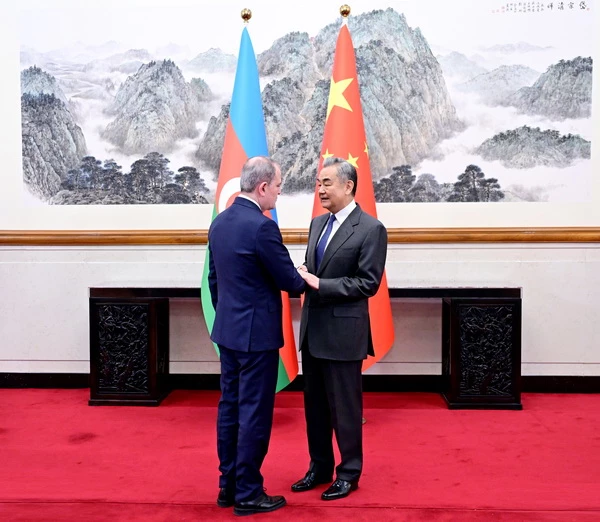
- Late January: Foreign Minister Wang Yi held talks with Azerbaijani Foreign Minister Bayramov, agreeing to deepen cooperation ahead of the 35th anniversary of diplomatic ties in 2027.
- Early February: President Aliyev visited Huawei’s Beijing exhibition hall and the Capital Museum during his China trip.
President Aliyev stated: “Within a year, Azerbaijan and China signed two documents—first strategic partnership, then comprehensive strategic partnership. This has given a major boost to bilateral economic relations.”
Bilateral trade has surpassed $4 billion.
03 Flagship Cooperation Projects: From Traditional Energy to New Frontiers
Energy Cooperation: Expanding from conventional oil & gas to green energy. State Oil Company of Azerbaijan (SOCAR) has signed framework agreements with CITIC Construction.
- Azerbaijan aims to raise renewable energy capacity to 30% of total power by 2030.
- Energy storage systems are a critical demand.
Logistics Hub: The Trans-Caspian International Transport Route (Middle Corridor) is a strategic priority, with Azerbaijan at its core.
Digital Economy: Multiple cooperation agreements signed. Chinese e-commerce, smart logistics, and industrial automation solutions align closely with Azerbaijan’s modernization needs.
04 Market Demand: Key Sectors for Chinese Enterprises
Azerbaijan has a relatively weak industrial base and relies heavily on imported manufactured goods. Machinery, vehicles & parts, and electrical/electronic equipment account for nearly half of total imports.
High-Growth Sectors:
- Infrastructure & Industrial Goods: Construction machinery, equipment, industrial gear, hardware & building materials, power tools.
- New Energy: PV modules, wind turbines, energy storage batteries.
- Agricultural Machinery & Tech: Tractors, smart agriculture, water-saving irrigation, PV greenhouses.
- Consumer Goods & Automotive: Home appliances, consumer electronics, automobiles & spare parts.
Market demand follows the pattern: production materials first, consumer goods later.
05 Policy Environment: Incentives Driving Economic Transition
“Investment Promotion Document” Regime (for certified investors, 7-year benefits):
- 50% reduction in corporate income tax.
- Full exemption from property tax and land tax.
- VAT (18%) and customs duty (up to 15%) exemption for imported machinery, equipment, and related technology.
Special Zone Policies: Alat Free Economic Zone, Sumgait Chemical Industrial Park, etc., offer 10-year tax holidays.
06 Trade Models & Practical Guidelines
Three Market Entry Modes:
- Agency/Distribution: Critical to partner with strong, well-connected local firms.
- Project-Based: Requires high-level liaison and robust local partners.
- Direct Investment/Local Manufacturing: Qualifies for tax incentives and serves as a hub for neighboring markets.
Critical Pitfalls to Avoid:
- Neglecting long-term relationship building and seeking quick wins.
- Underestimating customs complexity and potential corruption risks.
- Attempting to operate alone without local partners.
- Navigating opacity risks under the Trade Secrets Law.
Conclusion
On April 2, 2026, China and Azerbaijan marked the 34th anniversary of diplomatic relations. From C5 to C6, from energy corridor to Digital Silk Road, Azerbaijan is emerging as an indispensable strategic pivot for Chinese enterprises going west.
Opportunities and risks coexist, but the window of opportunity will not stay open forever.
2026 SMART LIFE EXPO AZERBAIJAN
- Dates: September 21–23, 2026
- Venue: Baku
- Frequency: Annual
Against a backdrop of global turmoil, rising geopolitical risks, and mounting challenges to global economic governance, China has remained committed to openness, cooperation, and mutual benefit, steadily advancing friendly ties with countries worldwide. On March 25, Zhao Leji, Chairman of the Standing Committee of the National People’s Congress of China, met with Sahiba Gafarova, Speaker of the Milli Mejlis (National Assembly) of Azerbaijan, in Boao, Hainan, during the Boao Forum for Asia Annual Conference 2026. The two sides reached important consensus on deepening China-Azerbaijan relations.

Zhao Leji noted that under the strategic guidance of President Xi Jinping and President Ilham Aliyev, China-Azerbaijan relations have entered a new stage of high-quality, all-round development. China stands ready to work with Azerbaijan to follow the important consensus reached by the two heads of state, carry forward the fine tradition of mutual support, open up new space for win-win development, expand economic and trade investment, enhance connectivity, promote people-to-people bonds, and jointly advance the building of a community with a shared future for mankind. For her part, Gafarova reaffirmed Azerbaijan’s firm adherence to the one-China principle and expressed readiness to strengthen cooperation across all fields and deepen exchanges between legislative bodies.

Notably, just one week prior to the meeting, on March 13, the TIR international road transport route from the SCO Demonstration Zone to Azerbaijan was officially launched. A convoy carrying high-end manufacturing equipment from Chinese brands departed Qingdao, traveling along the “China-Kazakhstan-Russia-Azerbaijan” corridor and reaching Baku in just 13 days—halving the traditional maritime shipping time. This new logistics channel provides efficient and convenient support for Chinese enterprises to expand into West Asian markets.
West Asia and the Caucasus: A Key Direction for Chinese Enterprises “Going Global”
As a vital node along the Belt and Road Initiative, Azerbaijan sits at the crossroads of Eurasia, bordering the Caspian Sea to the east, Russia to the north, and Iran to the south, serving as a critical hub connecting Central Asia, Europe, and the Middle East. In July 2024, the two countries issued a Joint Statement on Establishing a Strategic Partnership; in April 2025, bilateral relations were further elevated to a Comprehensive Strategic Partnership, accompanied by the signing of an agreement on mutual visa exemption for ordinary passport holders. Bilateral trade reached $2.47 billion in 2024, surging 43.3% year-on-year; from January to September 2025, it hit $2.15 billion, up 24.3% year-on-year.

8th Smart Life Expo Azerbaijan: An Ideal Platform for Chinese Enterprises to Explore the Market
The 8th Smart Life Expo Azerbaijan will be grandly held from September 21 to 23, 2026, at the Baku International Expo Center, the capital of Azerbaijan.
1. Authoritative Organizers
Co-hosted by Halis International Exhibition Group, the Azerbaijan Entrepreneurs Association (ASK), the Azerbaijan Small and Medium Enterprise Development Agency (KOBIA), and the Azerbaijan Export and Investment Promotion Agency (AZPROMO).
2. Four Focus Sectors
The expo will run parallel exhibitions covering building materials and decoration, home appliances and consumer electronics, premium products, and automobiles and parts.
3. Vast Market Potential
Rich in oil and gas resources, Azerbaijan is known as the “Little Dubai of West Asia.” However, its domestic production of daily necessities is limited, with most goods relying on imports—especially high-quality products.
4. Extensive Market Reach
Azerbaijan serves as a transit hub for re-export to neighboring markets including Iran, with deep cultural and historical ties facilitating smooth re-export trade.
The Azerbaijani government is vigorously promoting economic diversification. The massive “Khazar Islands” infrastructure project, with an estimated investment of $100 billion and covering 24 square kilometers, will include 60 high-rise residential buildings, 150 schools, 50 kindergartens and hospitals, and multiple commercial centers. Additionally, Azerbaijan imports approximately $2.3 billion worth of building materials, hardware, and decoration products annually, presenting huge business opportunities for Chinese enterprises.
Amid profound and complex changes in the international landscape—where geopolitical conflicts and trade protectionism are intertwined, and global economic recovery faces numerous uncertainties—over-reliance on a single traditional market only increases operational risks. The more uncertain the situation, the more strategic vision is needed to explore diverse, stable, and promising emerging markets.
It is precisely amid such changes that China’s cooperation with Azerbaijan and other Caucasus countries has bucked the trend, entering its best historical period. Azerbaijan boasts political stability, friendly relations with China, and, as a key Belt and Road node, is leveraging its Caspian energy and geographical advantages to drive economic diversification. With the smooth operation of logistics channels such as the China-Europe Railway Express and the Trans-Caspian International Transport Corridor, Chinese goods now reach Azerbaijan and neighboring Caucasus, Central Asian, and European markets far more efficiently, with trade ties growing ever closer.
Against rising trade barriers and market saturation in Europe and the United States, Azerbaijan—with its strategic location, favorable policy environment, and rapid infrastructure development—offers Chinese enterprises a strategic choice to mitigate risks and tap into a “blue ocean” market.
The 8th Smart Life Expo Azerbaijan, taking place in Baku from September 21 to 23, is not only a window to showcase the quality of “Made in China” but also an ideal platform for Chinese enterprises to penetrate the Caucasus region and tap into local infrastructure and consumer demand. We encourage Chinese enterprises to seize this historic opportunity, actively explore this vibrant Eurasian emerging market, gain a competitive edge in the global landscape, and jointly write a new chapter of mutual benefit and win-win cooperation!

China-Azerbaijan diplomatic interactions have continued to heat up, with a series of high-level meetings and practical cooperation injecting strong momentum into bilateral relations. From strategic guidance at the head-of-state level to in-depth coordination across various fields, the China-Azerbaijan Comprehensive Strategic Partnership is evolving from a grand blueprint into concrete practice.

Head-of-State Diplomacy Leads, Laying a Solid Foundation
Last year marked an important milestone in the history of China-Azerbaijan relations. Chinese President Xi Jinping and Azerbaijani President Ilham Aliyev met twice within a single year, jointly announcing the establishment of the China-Azerbaijan Comprehensive Strategic Partnership, pointing the way for the high-quality development of bilateral relations.

Entering 2026, this positive momentum has been sustained. In late January, Azerbaijani Foreign Minister Jeyhun Bayramov visited China and held in-depth talks with Chinese Foreign Minister Wang Yi, promoting the early implementation of the consensus reached by the two heads of state.

All-Round Cooperation: From Consensus to Practice
Chinese Ambassador to Azerbaijan Lu Mei stated at a recent press briefing with mainstream media that regardless of changes in the international situation, China views and develops relations with Azerbaijan from a strategic perspective. The focus of future cooperation between the two sides will cover the following areas:
- In-depth alignment of development strategies: High-quality joint efforts to build the Belt and Road Initiative will resonate with Azerbaijan’s national modernization process, achieving all-round integration of trade, capital and people’s hearts.
- Mutual support on the international stage: China firmly supports Azerbaijan in hosting this year’s Summit of the Conference on Interaction and Confidence-Building Measures in Asia (CICA). The Azerbaijani side firmly supports the Four Global Initiatives proposed by President Xi Jinping and always adheres to the one-China principle.
- Booming people-to-people exchanges: Ambassador Lu Mei specifically mentioned that during the earlier evacuation of Chinese citizens from Iran, the Azerbaijani government provided efficient and convenient services, ensuring the safe passage of over 600 Chinese citizens—a touching detail that vividly demonstrates the true friendship and deep mutual trust between the two peoples.
Legislative Bodies Join Hands to Solidify Public Opinion
On March 16, Chinese Ambassador to Azerbaijan Lu Mei met with Sahiba Gafarova, Chairman of the National Assembly of Azerbaijan. Gafarova clearly stated that Azerbaijan attaches great importance to developing relations with China and is willing to strengthen multilateral cooperation with the National People’s Congress of China, exchanges on governance experience. Ambassador Lu Mei introduced the outcomes of the Two Sessions of China and expressed China’s sincere wish to share the opportunities of China’s modernization drive with Azerbaijan.
Close exchanges between legislative bodies will lay a more solid legal and public opinion foundation for the long-term development of bilateral relations.

New Journey Begins: Era Opportunities for China-Azerbaijan Relations
As the cornerstone of political mutual trust becomes increasingly solid and the consensus of win-win cooperation takes root, a golden era of pragmatic cooperation between China and Azerbaijan is approaching. Azerbaijan, the pearl of the Caucasus, is leveraging its unique geographical advantage—the crossroads connecting Europe and Asia—and its determination to actively promote economic diversification, making it an ideal destination for Chinese enterprises to “go global”.
Currently, China-Azerbaijan relations are at their best in history, with growing political mutual trust and comprehensive pragmatic cooperation unfolding. On this land full of opportunities, cooperation potential in infrastructure, energy, agriculture, information and communication, tourism, light manufacturing and other fields is waiting to be tapped, and more win-win stories are awaiting to be written.
History waits for no one. The ship of China-Azerbaijan relations has set sail, propelled by a favorable wind of opportunities.From September 21 to 23, let’s meet in Baku. Standing at a new starting point for the Comprehensive Strategic Partnership, let’s navigate the winds and waves together toward the vast blue ocean of opportunity that awaits pioneers.
A Must-Read for Global Traders: Azerbaijan Officially Joins Central Asia C6, Forging a New Trade Corridor Connecting Europe and Asia!

At the recently concluded 7th Consultative Meeting of the Heads of State of Central Asia, the five Central Asian nations formally admitted Azerbaijan as a member, marking the successful upgrade of the original C5 mechanism to C6. This historic decision is not only a major shift in the geopolitical landscape of Central Asia but also opens a brand-new logistics shortcut to Europe for Chinese foreign trade enterprises. As a core node of the Eurasian corridor, Azerbaijan is rising at an astonishing pace to become a new blue ocean market in global trade, presenting unprecedented opportunities for international businesses.

Azerbaijan Joins the C6: A New Chapter in the Geopolitical Landscape
Azerbaijan’s accession not only enhance the cooperative framework of the Central Asian region but also propels it to the forefront of global trade. Serving as a bridge connecting China and Europe, Azerbaijan leverages its unique geographical location to become a key hub on the Eurasian continent, poised to play an even more significant role in global logistics and trade in the future. For foreign trade enterprises, this shift translates into new opportunities for international cooperation, more market access points, and more efficient logistics channels. 
Azerbaijan’s membership deepens cooperative ties among Central Asian nations and provides Chinese exporters with a new platform to enter European and Middle Eastern markets. Whether for traditional goods export or the rapid development of cross-border e-commerce, Azerbaijan offers a vital springboard for businesses.
Azerbaijan: The Eurasian Bridge and a Strategic Blue Ocean Market
Situated at the crossroads of Europe and Asia, Azerbaijan connects major trade routes linking Eastern Europe, the Middle East, and Central Asia. In recent years, leveraging its unique geographical advantages, Azerbaijan has actively promoted trade cooperation with China and other global powers. Participating in global governance through the “Belt and Road” Initiative, it has evolved into both an energy powerhouse and an important manufacturing base. Azerbaijan is not only rich in resources like oil and gas but also, through its ongoing industrialization, provides abundant cooperation opportunities for foreign trade enterprises.
Under the “Belt and Road” framework, Azerbaijan’s significance as a logistics hub between China, Central Asia, and Europe continues to grow. With the upgrade of the Central Asia C6 mechanism, Azerbaijan will serve as a new trade bridge connecting the Middle East and Europe, offering foreign trade enterprises more convenient and efficient market access.

Geopolitical and Logistics Advantages: A New Logistics Shortcut to Europe
Located on the Caspian Sea coast, Azerbaijan boasts vital ports such as the Port of Baku and Alat Port, which are essential nodes on the “Middle Corridor.” From these ports, goods can quickly reach markets in Turkey, Europe, and the Mediterranean. In 2024, the number of container block trains passing through this corridor surged to 390, a significant increase compared to 2023, greatly enhancing the efficiency and reach of cross-border logistics.

Clear Market Demand: Azerbaijan’s Significant Economic Potential
With a population of 10.2 million and a relatively high GDP per capita (USD 7,284), Azerbaijan exhibits a clear trend of consumption upgrading. There is sustained, import-dependent demand, particularly in sectors like industrial equipment, transportation, and consumer goods. China’s market share in Azerbaijan is continuously expanding, especially in areas such as automobiles, home appliances, and construction materials. In 2024, bilateral trade between China and Azerbaijan reached USD 3.744 billion, a year-on-year increase of 20.7%.
Prime Window of Opportunity: Four Practical Strategies
As Azerbaijan’s strategic importance grows, so do the opportunities for foreign trade enterprises in this market. How can businesses seize this prime window? Here are four practical strategies to help you gain a competitive edge:
- Precise Market Positioning: Azerbaijan not only borders Central Asian countries but also connects with key economies like Turkey and Russia, offering immense market potential. Enterprises should focus on the region’s resource advantages, particularly in sectors like energy and infrastructure development, to capitalize on Azerbaijan’s rapid growth.
- Optimize Logistics Channels: With the upgrade of the C6 mechanism, Azerbaijan’s logistical advantages will become even more pronounced. Businesses should leverage these more efficient transport routes to optimize cross-border e-commerce and supply chain management, reducing costs and improving transportation efficiency.
- Strengthen Policy Alignment: As a key “Belt and Road” partner, Azerbaijan benefits from numerous trade policy preferences. Enterprises should actively monitor and understand the cooperation policies between Azerbaijan and China to secure trade facilitation, tax incentives, and other policy support.
- Focus on Middle Eastern and European Market Demands: Azerbaijan is not only a hub connecting Central Asia and Europe but also a significant consumer market in its own right. Businesses should monitor local demand changes in energy, manufacturing, agriculture, and other fields to uncover further cooperation opportunities and expand market share.

Our Azerbaijan International Trade Exhibition: Seize the Opportunity, Win in the Future
As a professional exhibition organizer deeply rooted in the industry, we will host the Smart Life Expo Azerbaijan from September 21-23, 2026, in Baku. The event will bring together industry experts, business representatives, and investors from around the world. The exhibition will provide a one-stop platform for foreign trade enterprises to directly connect with potential clients from Azerbaijan and the Central Asian region, helping you rapidly enter this emerging market.
Situated at the Heart of Eurasia, Azerbaijan Brings New Opportunities for Global Trade.


To many, Georgia is a distant and quaint country, known for its ancient churches, wine, and the Caucasus Mountains. But in recent years, more and more Chinese companies have set their sights on this nation—not only because of its strategic location at the crossroads of Europe and Asia, but also because it’s becoming a springboard for Chinese manufacturing to enter Eastern Europe.
Walk through the streets of Tbilisi, and you’ll be struck by the overwhelming presence of Chinese goods. As one industry insider joked:
“This doesn’t feel like Georgia anymore—it’s practically the second home ground for Chinese home appliance brands.”
Behind the humor is the reality of Chinese brands rapidly gaining market share in this Caucasian country.
Why Are Chinese Home Appliances Booming in Georgia?
Though Georgia is a small country with a population of just 3.7 million, its home appliance market has been steadily expanding.
According to Statista, Georgia’s home appliance market is projected to reach $210 million in 2024, with a compound annual growth rate (CAGR) of 5.6% over the next five years.
Local consumers are shifting from simply buying “durable goods” to prioritizing modern appliances that offer functionality, aesthetics, and energy efficiency—with particular preference for:
- Kitchen appliances (electric kettles, air fryers, blenders)
- Personal care devices (hair dryers, shavers, hair stylers)
- Smart audio-visual equipment (speakers, projectors, TVs)
- Climate control and heating devices (ACs, refrigerators, electric fireplaces)
Thanks to high cost-performance ratios, reliable supply, and complete product lines, Chinese brands have become one of the main sources of imports.
New Regulations Incoming: EU-Level Energy Standards Required
The Georgian government recently announced a series of new regulations:
Effective December 31, 2025, a set of EU-aligned energy efficiency laws for household appliances will come into force, including:
- Mandatory energy labels from A+++ to D for consumer clarity
- Gradual phase-out of high-GWP refrigerants (e.g., R-410A)
- AC units and other appliances must meet EN 14511 and IEC EN 60335 standards
- Full adoption of Eco-design requirements aligned with EU Directives
This means Chinese manufacturers must begin adapting their products to meet the new standards and prepare for certification and labeling updates to ensure smooth export.
Chinese Enterprises Shine Bright — Big Orders Keep Rolling In!
At the 2024 Georgia International Expo, Chinese home appliance brands from across the country made a strong collective appearance—with impressive results:
Ningbo Xuehai Audio Co., Ltd.
A seasoned exhibitor in Georgia, this audio brand wowed local buyers with its sound quality and sleek design – securing over $300,000 in intended deals.
Ningbo Leiying International Trade Co., Ltd.
Specializing in digital gadgets like Bluetooth earbuds, projectors, and mini speakers, the company landed over $400,000 in orders during the three-day show. Several clients requested exclusive distribution rights, and their trade director said they’ll increase investment in the Georgian market.
Ningbo ANKE Electrical Technology Co.,Ltd
Their electric fireplaces and heating products were a major hit – drawing long lines at the booth and reaching $180,000 in intended deals.
Ningbo Frank Electrical Technology Co.,Ltd
Multiple models of electric kettles captured buyers’ interest with live demos, resulting in nearly $200,000 in signed orders.
Ningbo Shanding Electric Co., Ltd
Exhibiting a full range of personal grooming appliances like shavers, hair dryers, and stylers, the brand drew significant interest and signed $250,000 in deals.
Anhui Qiaoge Kitchenware Co., Ltd
Known for their healthy cooking air fryers, their booths attracted both families and local distributors – making them one of the hottest-selling product lines.
In total, the expo generated 200+ intended orders worth over $3 million, once again proving the growing influence of Chinese home appliance brands in the Georgian market.
September 19 – 21: Smart Life Expo 2025 Georgia Is Calling!
As China – Georgia trade relations continue to deepen, the 2025 Georgia International Expo will help Chinese companies systematically tap into the Georgian and surrounding markets:
Date: September 19 – 21, 2025
Venue: JSC Expo Georgia
Exhibition Highlights:
- 200+ high-quality Chinese enterprises showcased
- Direct matchmaking with local supermarkets, wholesalers, and chain buyers
- In-depth insights into policy changes and certification trends
- One-stop platform for trade networking and brand promotion
With the new energy regulations taking effect soon, now is the best time to seize the window of opportunity and enter the Georgian market!
Chinese Brands, Rising in the Caucasus — Starting from Georgia!
Why has this small country become a hidden champion for Chinese home appliance brands?
Because Georgia is fertile ground for market growth, a reflection of Eastern Europe’s evolving consumer landscape, and a symbol of China’s high-quality manufacturing going global.
In 2025, don’t miss this blue ocean market.
See you in Tbilisi at Smart Life Expo 2025 Georgia!